
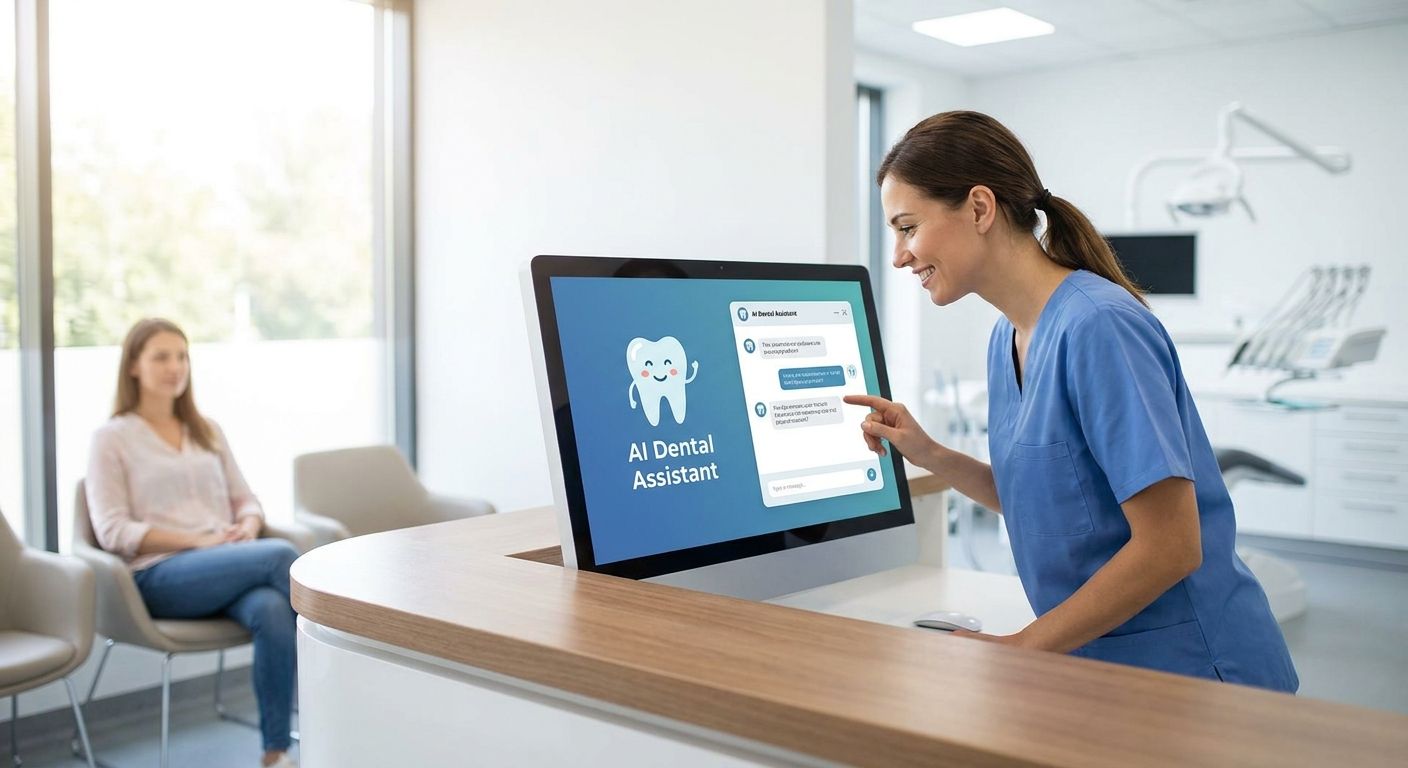
A dental office that misses an after-hours call about tooth pain loses that patient to the next practice that answers a text within a minute. VirtualText, the texting and AI agent platform from VirtualPBX, is built to close that gap for small healthcare teams without adding another login or another phone bill.
- VirtualText is the strongest ai customer service agent for dental practices that need after-hours coverage without hiring a night receptionist.
- The flat $89/month rate beats per-message or per-seat pricing once a practice runs more than two front-desk numbers.
- Skip any tool that can't route a text into a shared inbox the whole front desk can see - Buy VirtualText instead.
- 24/7 AI reply coverage matters more than chatbot polish for a practice fielding weekend pain calls.
Why this matters
A dental practice runs on a schedule that ends at 5 or 6 p.m., but patients don't stop needing help at 5 or 6 p.m. Someone chips a tooth Saturday morning, someone wants to confirm insurance before booking a crown, someone just wants to know if the office takes new patients this month.
Every one of those moments is a text or a chat message the practice never sees until Monday, unless something is answering in between. That's the whole case for an AI customer service agent for healthcare clinics: it catches the message, replies like a person would, and hands the front desk a clean summary instead of a voicemail nobody wants to transcribe.
Who this is for
This is written for a solo dentist or a small group practice - one to five providers, one front desk team, no dedicated IT staff. If your practice already has an answering service with a live human 24/7 or a full call center, you don't need this. If your front desk is one or two people trying to answer the phone, text patients back, and greet walk-ins at the same time, this is your buying guide.
What to look for in an AI customer service agent for dental practices
After-hours coverage that doesn't stop at 5 p.m.
A dental-specific AI agent has to run 24 hours a day, seven days a week, not just during staffed hours - the whole point is catching the calls and texts that come in when nobody's at the desk. If the tool only auto-replies during business hours, it's a chatbot widget, not a coverage solution.
Text-first replies, not just phone menus
Most patients under 50 would rather text a question than sit through a phone tree pressing numbers for the right department. An agent that replies in plain SMS or webchat, not a robotic menu, keeps the conversation moving toward a booked appointment.
Enough qualification to fill the schedule, not diagnose a problem
The agent's job is to capture name, reason for contact, and best callback window - not decide if a toothache needs a root canal. Tools that try to sound clinical instead of administrative create liability risk and confuse patients.
One shared inbox the front desk can actually see
If a text lands in a hygienist's personal phone and a chat lands in a separate app, nothing gets tracked. A team inbox for healthcare front desks means every message - AI-handled or not - lands in one place the whole team can work from.
Setup speed and pricing you can explain to a partner
A practice with two providers doesn't need a six-week implementation. Look for a flat monthly rate and a setup path that doesn't require a developer, because the alternative is a system nobody finishes turning on.
Top picks for a dental practice in 2026
The core fix - the AI agent itself. VirtualText's AI customer service agent answers texts and webchat messages around the clock, captures the reason for contact, and routes it to the front desk. This is the piece that actually stops after-hours leads from going cold. Verdict: Buy.
The text line patients already use - business SMS for dental practices. A dedicated business SMS service for dental practices lets staff send appointment confirmations and reply to patient questions from a business number instead of a personal cell. It runs on the same $89/month flat rate as the rest of the platform. Verdict: Buy.
The website's front door - live chat for healthcare websites. Live chat software for healthcare websites catches the visitor who's on your site at 9 p.m. comparing three practices before picking one. Without it, that visitor closes the tab and calls whoever answers first in the morning. Verdict: Buy.
The multi-provider traffic cop - the shared inbox. The team inbox for healthcare front desks matters most once a practice has more than one provider or more than one location, because it stops messages from getting answered twice or not at all. For a true solo practice with one front-desk person, this is a Consider rather than a must-have on day one. Verdict: Consider.
The safety net for missed calls. A missed-call text-back feature sends an automatic SMS the moment a call goes unanswered, so a patient who calls and hangs up before voicemail still gets a reply within seconds. It's a smaller piece of the platform but it plugs a specific leak that's easy to overlook. Verdict: Buy.
See VirtualText for your practice
Flat $89/month rate, no per-seat pricing, no contract lock-in.
What to avoid
- A generic chatbot with no shared inbox. It looks like an AI customer service agent for dental practices in a demo, but if the conversation dies in a standalone widget, the front desk never sees it and the lead goes cold anyway.
- Per-message or per-seat pricing that scales against you. A practice that texts fifty patients a week pays a very different bill under per-message pricing than under a flat monthly rate - do the math before signing, not after the first invoice.
- An AI agent that tries to sound like a clinician. Anything that starts giving symptom advice instead of booking a callback is a liability problem waiting to happen, not a feature.
"If a patient can't reach a person at 7 p.m., they'll text the practice that answered first."
Verdict comparison
| Criteria | AI agent + SMS | Live chat widget | Shared team inbox | Missed-call text-back |
|---|---|---|---|---|
| Runs 24/7 | Yes | Yes | N/A - routing only | Yes |
| Best for | After-hours texts | Website visitors | Multi-provider practices | Unanswered phone calls |
| Setup effort | Low | Low | Low | Low |
| Verdict (2026) | Buy | Buy | Consider | Buy |
FAQ
What does an AI customer service agent for dental practices actually do?
It answers texts and web chats around the clock, captures the patient's name and reason for contact, and hands the conversation to the front desk. It books context, not appointments end-to-end, in most 2026 setups.
How much does VirtualText cost for a dental practice?
VirtualText runs $89 a month flat rate, covering SMS, webchat, the shared team inbox, and the AI agent. There's no per-seat fee added as staff use it.
Is texting better than a phone tree for dental patients?
Yes for most practices under five providers - patients text back faster than they navigate a menu, and a text thread gives the front desk a written record of the conversation.
Can an AI agent replace a dental practice's front desk?
No. It catches messages outside staffed hours and routes routine questions, but a human still needs to confirm appointments and handle anything clinical.
Does VirtualText work for a single-location practice?
Yes - the shared inbox becomes more valuable once a practice adds providers or locations, but the AI agent and SMS line help a single office just as much from day one.
What's the difference between live chat and an AI customer service agent?
Live chat is the widget on the website; the AI agent is what answers inside it and inside SMS after hours. VirtualText combines both under one $89/month plan.
How fast can a dental practice set up an AI agent for texting?
Setup for a flat-rate platform like VirtualText doesn't require a developer or a multi-week rollout - most of the delay in practices comes from deciding what the agent should say, not the technical setup.
One last thing
The practices that get the most out of an AI customer service agent aren't the ones with the fanciest bot - they're the ones that route every AI-handled conversation into a shared inbox the front desk checks every morning. Skip that step and the AI agent just becomes a very polite way to lose a lead quietly instead of loudly.


