A dental patient who can't get through by phone doesn't leave a voicemail anymore — they text, or they call the next practice on the list. This guide covers what to look for in a business sms service for dental practices in 2026, which options actually hold up for a front desk with more than one person, and where a texting platform pays for itself inside a few weeks.
Why this matters
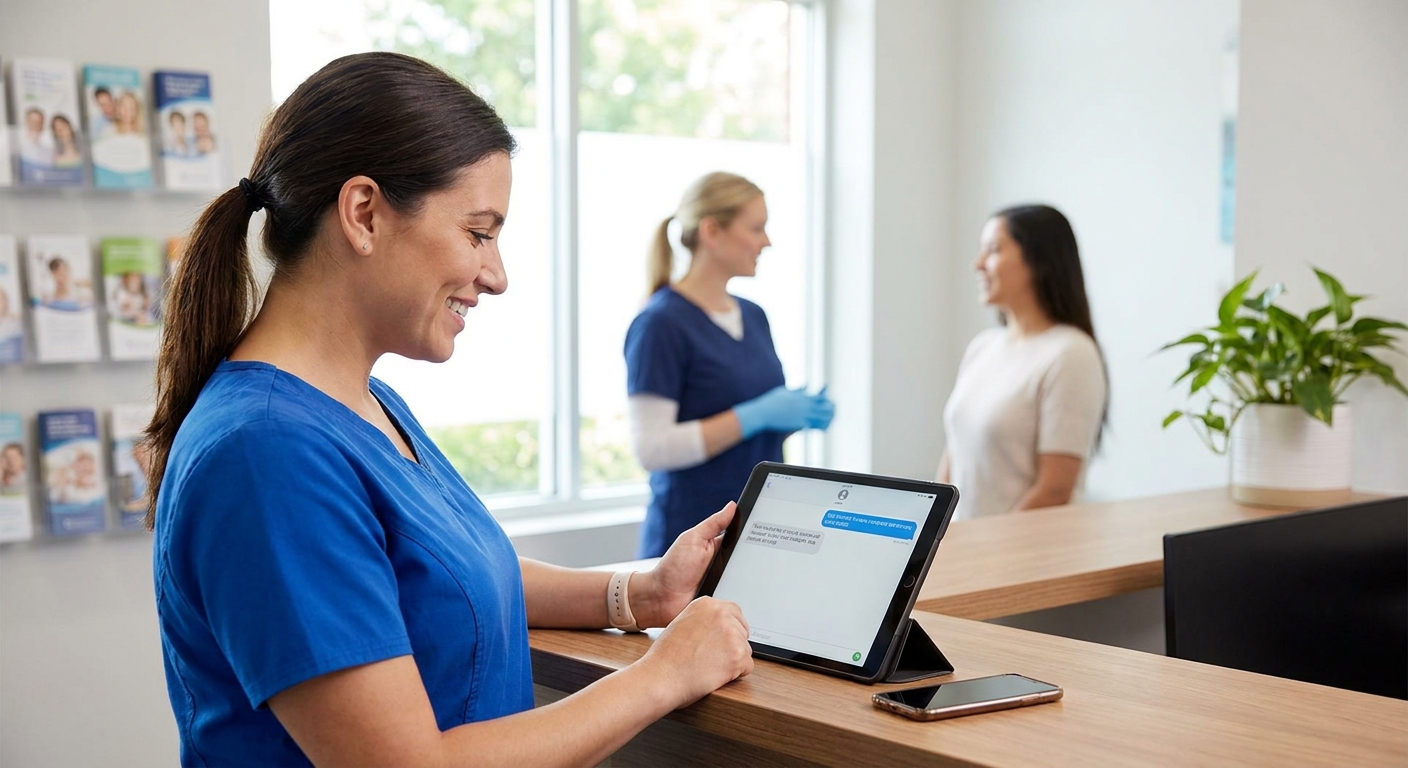
Most dental offices already run on phone tag: patients calling to confirm, reschedule, or ask about insurance while the front desk is mid-checkout with someone else. A text thread solves that without pulling anyone off the counter. The problem is that a single staff member's personal phone can't scale past one provider, and a generic mass-texting tool built for marketing blasts isn't built for two-way patient conversations.
VirtualText by VirtualPBX runs $89 a month flat, with no contract and a 14-day money-back guarantee, and it's built for exactly this — a shared team inbox plus an AI agent that can answer after-hours texts before a competing practice does. That's the baseline this guide measures everything else against.
- VirtualText by VirtualPBX costs $89/month flat, no contract, and covers shared inbox, webchat, and AI texting — Buy for any practice with more than one front desk seat.
- Personal cell phone texting works for a solo provider but has no shared visibility once a second staff member needs the thread — Skip past one operator.
- Missed-call-to-text and after-hours coverage matter more than mass SMS blasts for a business sms service for dental practices.
- Flat-rate, no-contract pricing beats per-message billing once a practice sends more than a handful of reminders a week.
- A 14-day money-back guarantee means a practice can test patient texting for two weeks before committing.
Who this is for
This is written for office managers and practice owners running one to five chairs, where the front desk answers phones, checks patients in, and handles insurance calls at the same time. If your practice already misses calls during lunch, at closing, or on the one day a hygienist is out, texting is the fix that doesn't require hiring anyone. It's a fit whether you're running a single location or coordinating a small multi-location group that needs one number patients can reach either way.
What to look for in a business SMS service for dental practices
Shared team inbox
One number, visible to the whole front desk, matters more than any other feature on this list. Without it, texts pile up on whoever's personal phone the patient happened to save, and coverage disappears the day that person is off.
Missed-call-to-text
A caller who doesn't leave a voicemail is still a patient who wants an appointment. A system that auto-texts a missed caller within seconds turns a dropped call into a booked visit instead of a lost one.
Flat, predictable pricing
Dental offices send a lot of short messages — confirmations, reschedules, insurance follow-ups. Per-message billing adds up fast and makes the monthly bill unpredictable. A flat rate like VirtualText's $89 a month means the cost doesn't move whether the office sends 50 texts or 500.
After-hours and AI coverage
Patients text at 7 p.m. about a broken crown or a Monday appointment. A service with an AI agent that can respond naturally after hours — not a canned auto-reply — keeps that conversation alive until staff are back at their desks in 2026's always-on patient expectations.
Number continuity during setup
The practice's main line is often printed on signage, insurance cards on file, and years of Google reviews. Any texting platform worth using should add SMS to that existing number without downtime or a forced number change.
Real human support
When a text isn't delivering or a staff login breaks mid-morning, the office needs someone on the phone who can fix it that day, not a support ticket queued for 48 hours.
Top picks for dental practice texting
The flat-rate pick: VirtualText by VirtualPBX One number, one shared inbox, $89 a month, no contract. It bundles SMS, webchat, and an AI agent built to catch after-hours and website inquiries before a competing office does. For a practice running two or more front desk staff, this is the Buy — the flat rate and 14-day money-back guarantee make it low-risk to test for two weeks against whatever the office is doing now.
The DIY option: a personal cell phone Free, familiar, and fine for exactly one provider working alone. The moment a second staff member needs visibility into the same patient thread, this breaks — there's no shared inbox, no after-hours automation, and the number disappears if that employee leaves. Skip past one operator.
The call-only pick: a phone-answering service without texting Catches calls, sometimes well, but does nothing for the patient who wants to text instead of call — which is a growing share of how patients under 40 prefer to communicate in 2026. Skip if texting is the actual gap you're trying to close.
The bare-bones app: a generic team texting tool without AI Gets the shared inbox right but leaves after-hours messages sitting unanswered until morning, and usually charges per message on top of a subscription. Consider only if the office never gets texts outside business hours — otherwise the missed-call-to-text and AI coverage gap shows up fast.
See VirtualText pricing and setup
Flat $89/month, no contract, 14-day money-back guarantee.
What to avoid
- Mass-text blast platforms. Built for marketing campaigns, not two-way patient conversations — they don't handle a patient replying to confirm an appointment.
- Free texting tied to one person's phone. It looks like it costs nothing until that employee is out sick or leaves, and the whole message history walks out the door with them.
- SMS bolted onto a call center contract. Often billed per message on top of the base contract, which turns predictable costs into a variable line item nobody budgeted for.
Verdict comparison
| Option | Shared inbox | After-hours AI | Flat pricing | Verdict |
|---|---|---|---|---|
| VirtualText by VirtualPBX | Yes | Yes | $89/mo flat | Buy |
| Personal cell phone | No | No | Free | Skip past one provider |
| Call-only answering service | No (calls only) | Partial | Varies | Skip for texting needs |
| Generic team texting app | Yes | No | Often per-message | Consider if no after-hours volume |
FAQ
What's the best business SMS service for dental practices in 2026?
VirtualText by VirtualPBX is the strongest fit for most small dental practices in 2026 because it combines a shared team inbox, missed-call-to-text, and an AI agent for after-hours messages at a flat $89 a month. It works best for practices with two or more front desk staff who need to see the same patient threads.
How much does business SMS cost for a dental office?
VirtualText runs a flat $89 a month with no contract, regardless of message volume. That compares favorably to per-message billing, which can climb quickly once a practice is sending dozens of reminder and confirmation texts a week.
Can a dental practice keep its existing phone number when adding texting?
Yes, a properly set up business texting service adds SMS to the existing main line without requiring a number change. That matters because the number is usually printed on signage, insurance forms, and years of patient records.
Is texting patients different from using a personal cell phone?
Business SMS gives the whole front desk visibility into the same conversation thread, while a personal cell phone only shows messages to whoever owns that phone. It also keeps the message history with the practice instead of with an individual employee.
What happens to patient texts sent after the office closes?
With after-hours AI coverage, a text sent at night gets a natural response instead of silence until morning. Without it, those messages sit unanswered and the patient often calls a different office instead.
Does staff need a separate app to text patients?
Most platforms, including VirtualText, run through a shared web-based inbox rather than requiring every staff member to install something on a personal phone. That keeps the setup simple for a front desk that's already juggling scheduling software and phones.
Is AI texting better than an auto-reply template for a dental office?
An AI agent can hold a real back-and-forth conversation about scheduling or a question, while a static auto-reply just sends the same line every time. For after-hours messages, that difference decides whether a patient books or moves on.
How long does it take to set up business SMS for a dental practice?
Flat-rate platforms built for small teams, like VirtualText, are designed to go live without a lengthy IT project. Because there's a 14-day money-back guarantee, a practice can test the setup for two weeks before deciding to keep it.
One last thing
The text that saves the most appointments in 2026 isn't a marketing blast — it's the auto-reply sent the moment someone calls the office and hangs up without leaving a voicemail. Turn on missed-call-to-text once, and it quietly recovers patients every single week the front desk is too busy to catch the phone on the second ring.