
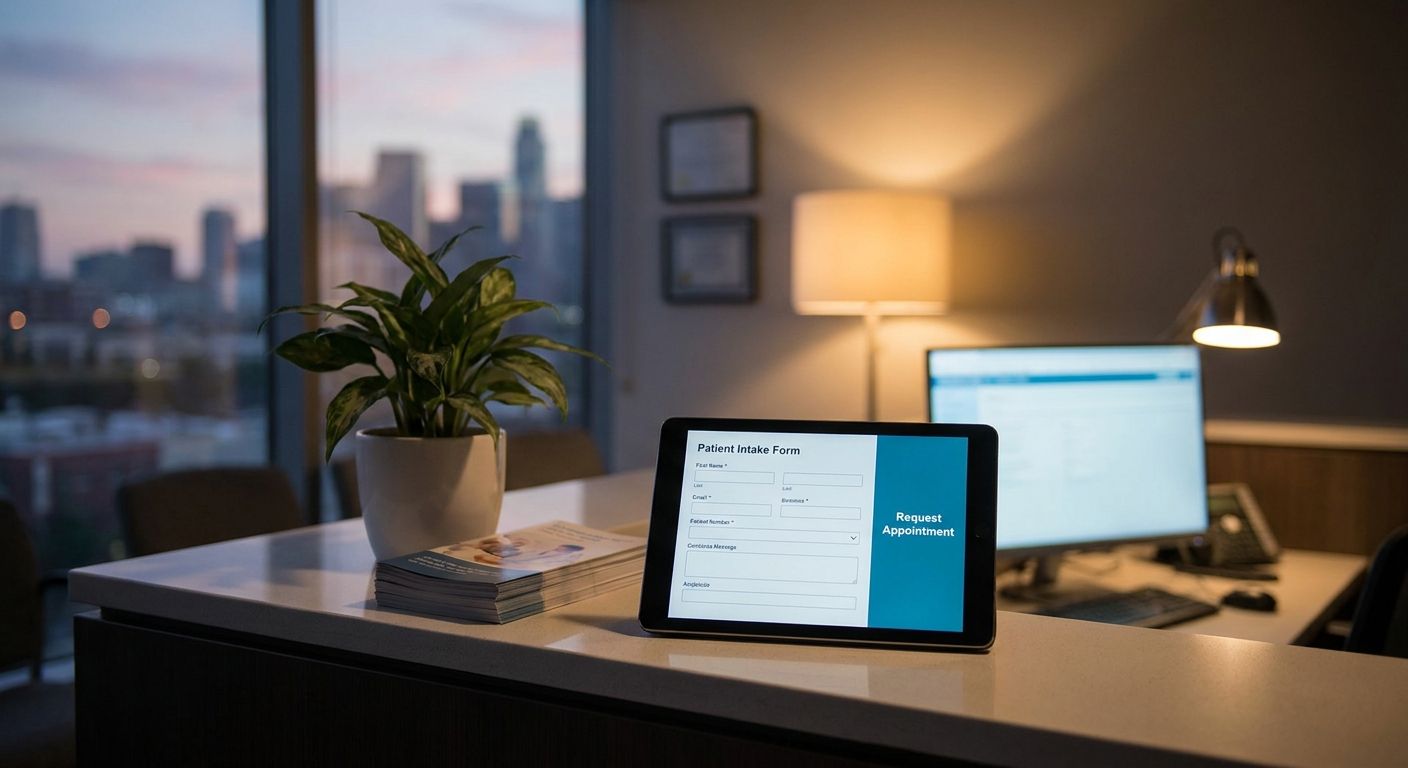
Healthcare clinics lose patient inquiries every night the front desk closes, and the best after-hours lead capture software for healthcare fixes that with texting, web chat, and an AI agent — not a voicemail box nobody checks in 2026.
- VirtualText wins for healthcare clinics in 2026: SMS, web chat, and an AI agent in one shared inbox for $89/month flat. Buy.
- Voicemail-only answering services and voicemail-to-text apps miss website and text leads entirely — Skip for 2026 clinics with digital traffic.
- Single-department SMS tools work for one job but split leads across two inboxes — Hold, not a primary system.
- Live chat without a shared inbox behind it loses after-hours leads the moment staff logs off — Consider only as a supplement.
Why this matters
A missed call after 6 PM isn't a missed appointment. It's a patient calling the next clinic listed on Google. Voicemail doesn't stop that: patients text or move on before they'll ever leave a message, and by 2026 most clinics see more after-hours texts and website chats than after-hours calls.
VirtualPBX handles the phone line for a clinic — calls, routing, the basics. After-hours lead capture is a different job: catching the website visitor who won't pick up the phone, the patient who texts at 9 PM, and the chat message left at midnight, then landing all three in one inbox by morning instead of three separate ones.
That's the gap this guide ranks. Every entry below is scored on whether it catches a lead outside business hours, not just whether it answers a call.
How we ranked
Every solution here is scored against three questions that matter for a clinic running without staff after 5 or 6 PM: how many channels it actually captures (phone, SMS, web chat), whether an AI agent can answer routine scheduling and insurance questions without a human awake, and whether the pricing model punishes a clinic for adding a second inbox seat.
Rankings use published 2026 feature sets and pricing pages, not lab testing — there's no independent bake-off for after-hours healthcare lead capture tools right now, so treat the order below as a buying framework, not a scored benchmark. Verdicts (Buy, Hold, Skip) reflect fit for a healthcare front desk specifically, not general small-business use.
The ranked list
1. VirtualText Team Inbox for Healthcare Front Desks — the safe pick
VirtualText runs SMS, web chat, and an AI agent through one shared inbox for $89 a month, flat — no per-seat pricing that punishes a clinic for adding a second front-desk login.
It catches a text sent at 9 PM, a chat left on the practice website at midnight, and routes both to whoever's on call in the morning, in the same thread. For a clinic where two or three staff members currently juggle a shared cell phone for after-hours messages, this replaces that with one inbox everyone can see.
Verdict: Buy. Team inbox software for healthcare front desks is the starting configuration most clinics should look at first in 2026.
2. AI Customer Service Agent for Healthcare Clinics — the after-hours closer
This is the same VirtualText platform configured so the AI agent answers routine questions — office hours, insurance accepted, appointment availability — without waking anyone up.
It doesn't replace a nurse triage line or handle clinical questions; it handles the scheduling and logistics questions that make up most after-hours contact anyway. A clinic getting a dozen "are you open Saturday" texts a week stops paying a human to type that answer at 11 PM.
Verdict: Buy for clinics with repetitive after-hours questions. The AI customer service agent for healthcare clinics page walks through what it can and can't answer on its own.
3. Live Chat for Healthcare Websites — the wildcard
Live chat catches the visitor who'd never call: someone comparing two clinics on their phone at 10 PM who'll message the first one that responds.
Without a shared inbox behind it, chat messages sent after staff log off just sit there until morning — so it only works as a real after-hours tool when it's tied into the same inbox as SMS. Configured that way, it's the channel most clinics are leaving completely uncovered right now.
Verdict: Buy if your site gets meaningful evening traffic; Consider if it doesn't yet. Live chat software for healthcare websites covers setup on an existing site.
4. Texting for Urgent Care and High-Volume Clinics — built for call spikes
Urgent care and high-volume clinics get after-hours contact in bursts, not a steady trickle, and a single missed batch of texts during a flu spike is a full waiting room of no-shows the next morning.
This configuration is built for volume: multiple staff can work the same inbox at once instead of one phone getting passed around the on-call rotation.
Verdict: Buy for any clinic that sees walk-in-driven demand. Texting service for urgent care clinics is the relevant starting page.
5. Single-Department SMS Tools — the narrow fit
Some vendors sell SMS-only tools built for one department, like scheduling texts for a dental practice's hygiene calendar or reminder texts for a single specialty line.
These work fine for the one thing they do, but a clinic running one tool for texts and a separate one for web chat ends up checking two inboxes every morning instead of one — which defeats the point of after-hours capture.
Verdict: Hold. Fine as a narrow add-on, not as the primary system.
6. Traditional After-Hours Answering Services — the old habit
A staffed answering service still picks up the phone at 2 AM, but it does nothing with a text message or a website chat — those channels go uncovered no matter how good the phone coverage is.
Clinics that still route only to a phone-based service are covering the channel patients use least in 2026 and missing the two they're increasingly using instead.
Verdict: Skip as a standalone system for digital-first lead capture; keep it only as a backup for true clinical emergencies.
7. Basic Voicemail-to-Text Apps — the false shortcut
These apps transcribe a voicemail into a text message for staff to read the next morning — convenient, but the patient still had to call and wait on hold to leave that voicemail in the first place.
It solves a staff annoyance, not the patient's actual behavior of texting instead of calling.
Verdict: Skip for lead capture; it's a convenience feature, not a strategy.
Comparison table
| Solution | Channels covered | AI included | Pricing | Verdict |
|---|---|---|---|---|
| VirtualText Team Inbox (healthcare front desks) | SMS + web chat + AI | Yes | $89/month flat | Buy |
| VirtualText AI Agent (healthcare clinics) | SMS + AI conversation | Yes | $89/month flat | Buy |
| VirtualText Live Chat (healthcare websites) | Web chat | Optional | $89/month flat | Buy |
| VirtualText Texting (urgent care) | SMS, high volume | Yes | $89/month flat | Buy |
| Single-department SMS tool | SMS only | No | Varies by vendor | Hold |
| Traditional answering service | Phone only | No | Varies by vendor | Skip |
| Voicemail-to-text app | Voicemail transcription | No | Varies by vendor | Skip |
Where to buy
- Start on the page built for your specific setup — front desk inbox, AI agent, live chat, or high-volume texting — instead of a generic homepage. The configuration matters more than the brand name.
- Confirm the pricing is actually flat before signing. A lot of "lead capture" tools quietly bill per seat or per conversation once a free tier runs out.
- If a clinic already runs VirtualPBX for calls, ask whether the after-hours tool connects to that existing phone routing instead of duplicating it with a second system.
Stop losing after-hours patient messages
VirtualText runs SMS, web chat, and AI for $89/month flat, no per-seat pricing.
FAQ
What is the best after-hours lead capture software for healthcare providers in 2026?
VirtualText is the strongest fit for most clinics in 2026 because it combines SMS, web chat, and an AI agent in one shared inbox for $89 a month flat. A single-channel tool or a phone-only answering service leaves either texts or website chats uncovered.
How much does after-hours lead capture software cost for a small clinic?
VirtualText runs $89 a month flat with no per-seat pricing, so adding a second front-desk login doesn't raise the bill. Other vendors often price per seat or per conversation, so confirm the model before comparing costs directly.
Is text messaging a safe way to communicate with patients after hours?
Safety depends on how a vendor stores and encrypts messages, so ask directly about data handling before adopting any texting tool. Most clinics use after-hours texting for scheduling and logistics questions rather than clinical details, which limits the exposure either way.
Can one system handle both SMS and website chat for a medical practice?
Yes — VirtualText runs SMS and web chat through the same shared inbox, so both channels land in one place instead of two separate tools. That matters after hours specifically, because nobody is checking two inboxes at 10 PM.
Do patients prefer texting over calling after a clinic closes?
Patient behavior has shifted toward texting and website chat for non-urgent questions, and by 2026 many clinics see more after-hours texts than after-hours calls. A voicemail-only system misses that shift entirely.
Does after-hours lead capture software replace a phone-based answering service?
It replaces the phone service for scheduling and general questions but shouldn't replace true clinical emergency routing. Most clinics keep a phone line for emergencies and add SMS, chat, and an AI agent for everything else.
How fast should a healthcare practice respond to an after-hours message?
A same-morning reply is the baseline for 2026, but an AI agent can answer routine questions like hours and insurance immediately, overnight, without staff involvement. Faster replies to routine questions free up staff time for the messages that actually need a person.
One last thing
The clinics switching from voicemail to text-based after-hours capture in 2026 aren't doing it because voicemail broke — patients just stopped listening to it.
“If your after-hours system is still measured in call duration instead of reply speed, it's solving a problem patients stopped having.”


