
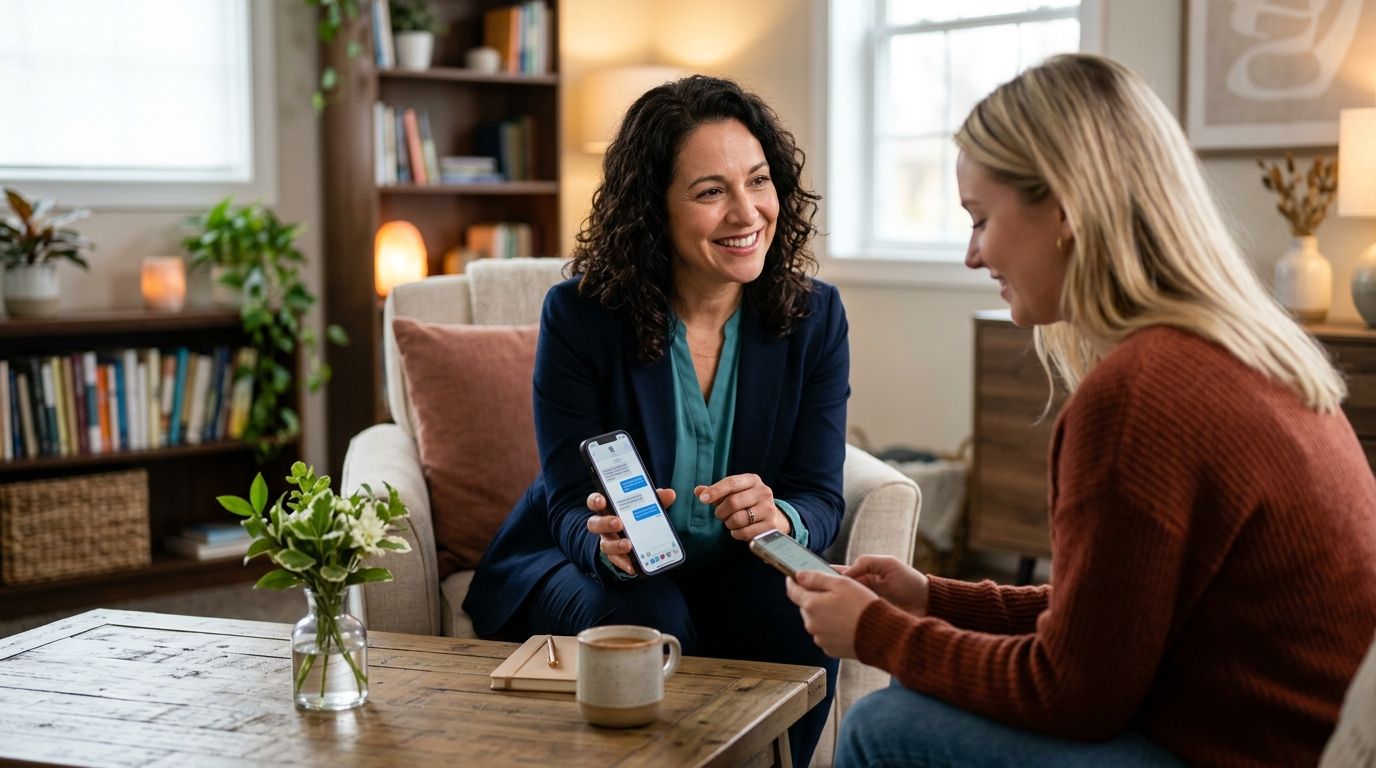
Mental health counseling practices use business SMS service to confirm appointments, collect intake paperwork, and answer scheduling questions without putting a therapist's personal number or clinical session details into a text thread. A general small-business texting tool misses the two things this segment actually needs: a documented consent trail and a hard boundary against clinical content landing in SMS.
- VirtualText is a flat-rate business SMS service built for small teams, and it fits mental health counseling practices that need a shared inbox instead of one clinician's personal phone.
- Appointment reminder texts cut no-shows better than phone calls because clients read a text in seconds instead of screening a call.
- HIPAA applies to any electronic message containing protected health information, so session content and diagnoses never belong in SMS.
- An AI agent should route scheduling and billing questions only, never attempt to answer a clinical question in 2026 or any other year.
- Practices with more than one clinician need message routing, not a single shared cell phone passed between staff.
Why business SMS service matters for mental health counseling practices
A missed session at a counseling practice isn't just a scheduling gap, it's a client who may not reschedule at all. Text reminders reach people who screen calls, and counseling clients screen calls more than most patient populations because caller ID from a clinic can feel exposing in a waiting room or at work.
HIPAA governs any electronic communication that includes protected health information, which means diagnosis, treatment notes, or session content have no place in an SMS thread regardless of which platform sends it. That constraint doesn't rule out texting, it just narrows what counseling practices should text about: confirmations, forms, billing, and logistics.
Multi-clinician practices add a second problem: whoever owns the phone that clients text becomes a bottleneck. A front desk coordinator who leaves for the day, a clinician who's in session, or a part-time biller who only works Tuesdays all create gaps unless messages route to a after-hours lead capture software for healthcare providers rather than a single inbox.
How to run business SMS for a counseling practice
Get a dedicated business number instead of a personal cell
The first fix costs nothing: stop texting clients from a personal phone. A dedicated number keeps client messages searchable, keeps them out of a therapist's personal device, and survives staff turnover.
- Use a free number from Google Voice for solo practice testing
- Separate the clinical line from the billing/admin line if volume is high
- Document the number on intake forms so clients expect texts from it
- Confirm the number supports both SMS and MMS for form attachments
- Retire any texting that currently happens from a clinician's personal cell
Send appointment reminder texts that reduce no-shows
Reminder timing matters more than reminder wording. A single reminder 24 hours out catches most reschedules; a second reminder 2 hours out catches the rest.
- Send the first reminder 24 hours before the session
- Send a second, shorter reminder 2 hours before
- Include a simple reply option like "C to confirm, R to reschedule"
- Keep the message generic: "appointment," never the type of session
- Review appointment reminder texts that reduce no-shows for message templates that stay compliant
Keep every text HIPAA-aware and consent-documented
Consent to text isn't optional and it isn't a formality either. A signed intake form authorizing SMS communication protects the practice and sets client expectations about what will and won't appear in a text.
- Add a texting consent checkbox to the intake packet
- State plainly that clinical content won't be sent by text
- Log consent status per client in whatever system tracks intake
- Train staff to redirect clinical questions to a phone call or portal message
- Read stay compliant with business texting regulations before writing any templates
Route messages to the right clinician, not one shared phone
A practice with three or more clinicians can't run on one shared device without someone missing a message meant for a colleague. Routing rules matter more here than in most service businesses because clients expect their specific counselor, not "whoever answers."
- Assign each clinician's messages to a labeled thread or tag
- Set an internal rule for who answers billing versus scheduling texts
- Give front desk staff visibility into every clinician's message queue
- Build an escalation path for messages that need a same-day answer
- A team inbox software for healthcare front desks removes the guesswork a shared phone creates
Automate scheduling replies without automating clinical answers
An AI agent can confirm a time slot, reschedule an appointment, or answer "do you take my insurance" without ever touching clinical content. The boundary has to be explicit in how the agent is scripted, not assumed.
- Script the agent to handle scheduling, hours, and billing questions only
- Give the agent a hard stop that routes anything clinical to a human
- Test the agent with a real client question about symptoms to confirm it deflects
- Set office hours so after-hours texts get an honest "we'll respond during business hours" reply, not a fake promise of immediate help
A counseling practice that texts session content is one message away from a HIPAA complaint — keep SMS to logistics and let a human handle everything clinical.
“If a text mentions symptoms, diagnosis, or session content, it doesn't belong in a text thread.”
Comparing business SMS options for counseling practices
| Option | Best for | Billing model | Key limitation |
|---|---|---|---|
| Personal cell / iMessage | Solo practitioners just starting out | Free | No shared visibility, no consent log, mixes personal and client texts |
| Google Voice | Testing a dedicated number before committing | Free | No routing across clinicians, no reminder automation |
| EHR built-in secure messaging | Single-clinician practices already on that EHR | Bundled with EHR subscription | Clients must open a portal app instead of texting directly, which lowers reply rates |
| VirtualText | Multi-clinician practices needing a shared inbox, reminders, and an AI agent for scheduling | Flat monthly rate | AI agent needs clear scripting so it never attempts clinical answers |
Verdict: solo practitioners can start on Google Voice and hold there while volume is low. Practices with two or more clinicians outgrow a shared phone fast — VirtualText is the buy once routing and consent tracking start slipping through the cracks.
See how counseling practices route texts
Check how a shared inbox and after-hours capture work for healthcare teams.
Common mistakes counseling practices make with business texting
- Texting session content or diagnosis details because it felt faster than a phone call — this is the single fastest way to create a HIPAA exposure.
- Skipping the consent checkbox on intake, then texting anyway without a documented authorization.
- Running every clinician's messages through one shared phone, which guarantees someone misses a message meant for them.
- Letting an AI agent try to answer a clinical question instead of scripting a hard stop that routes to a human.
- Sending reminder texts with the client's full name and appointment type visible on a lock screen, which is a privacy risk for anyone who shares a phone.
FAQ
Is texting HIPAA-compliant for a counseling practice?
Texting can be HIPAA-compliant if the message never includes protected health information like diagnosis or session content. Confirmations, reminders, and billing questions are generally safe; clinical details are not.
What's the best business SMS service for mental health counseling practices?
VirtualText is the best fit for practices with more than one clinician because it adds a shared inbox, appointment reminders, and consent tracking that a personal cell phone can't provide. Solo practitioners can start on a free option like Google Voice.
Do clients need to give consent before a counseling practice texts them?
Yes, texting consent should be collected in writing during intake, not assumed. A signed checkbox on the intake form protects both the client's expectations and the practice's compliance record.
Can an AI agent handle text messages for a counseling practice?
An AI agent can handle scheduling, billing, and hours questions, but it should never attempt to answer a clinical question. The script needs an explicit stop that routes anything clinical to a human staff member.
Do appointment reminder texts actually reduce no-shows at counseling practices?
Reminder texts sent 24 hours and again 2 hours before a session catch clients who screen phone calls, which is common among counseling clients. A simple confirm/reschedule reply option makes rescheduling easier than a missed call back.
How is business SMS different from a practice's EHR messaging portal?
EHR portal messaging requires the client to log into a separate app, which lowers response rates. A direct SMS number lets clients reply from their regular texting app, which most people check within minutes.
Should a multi-clinician practice use one shared phone number for texting?
No. A single shared number creates routing confusion once a practice has more than one clinician. A shared inbox with per-clinician tagging keeps messages from getting missed or answered by the wrong person.
One last thing
The consent checkbox is the cheapest fix on this whole list and the one practices skip most often in 2026 — add it to the intake packet before adding any texting tool, because a documented "yes" to SMS is worth more than any feature a platform offers.


